Deep Learning vs Machine learning
Machine Learning and Deep Learning are the two primary principles of Data Science and Artificial Intelligence respectively. Most people associate machine learning, deep learning, and artificial intelligence with the same keywords. However, all of these concepts are distinct but linked to one another. This article discusses the differences between deep learning vs machine learning, as well as how they fall into the wider field of artificial intelligence.
What is Machine Learning?
Machine learning is a subclass of artificial intelligence that employs techniques (including such deep learning) that allow computers to learn through history. The following procedure comprise the training experience:
- Data should be fed into a program. (At this point, you may contribute further data to the algorithm, for example by doing feature extraction.)
- Use this information to train models.
- The model should be tested and deployed.
- Make use of the existing algorithm to perform an automated predicted job. (In plenty of other terms, connect using the deployed approach to capture the model’s forecasts.)
Working of Machine Learning
The operation of machine learning models may be shown by detecting a picture of a cat or dog. To do just that, the machine learning model takes photos of either a cat and a dog as inputs, collects various image properties such as form, length, snout, eyes, and so on, applies the classification technique, and predicts the result.
Types of Machine Learning
1. Supervised Learning:
Supervised learning includes providing the models with all of the “real solutions” (labelled input) in order to train one how to recognise unlabeled data. It’s the same of showing someone to read a bird guide and utilizing flashcards to see if they’ve learnt how to recognize various animals themselves.
2. Unsupervised Learning:
Unsupervised learning, on the other hand, comprises providing the machine simply unlabeled input and then allowing the algorithm to find the similarities on its own. This machine learning approach is typically employed when the findings are unknown, requiring the algorithm to sift through the hidden layers of information and clustering (or grouping) data into groups based on the similarity or contrasts.
3. Reinforcement Learning:
The reinforcement learning technique is a trial-and-error methodology that enables a model to improve by providing feedback itself from activities. When the machine properly analyses or labels data, it gets “positive feedback,” so when it does fail, it gets “negative feedback.” This learning strategy encourages good conduct by “rewarding” it and “punishing” negative behavior.
Applications of Machine Learning
1. Image Recognition:
Among the more popular uses of machine learning is photo detection. It is utilized to recognise items, people, locations, digitized photos, and so forth. Automated buddy tagging recommendation: This is a frequent application for picture detection and facial identification.
Facebook has a tool that suggests auto-friend tagging. When we upload a picture with our Facebook friends, we instantly get a tagging recommendation with their names, which is powered by machine learning’s face identification and classification algorithm.
2. Product recommendations:
Machine learning is commonly utilized for item suggestions by different e-commerce and leisure organizations such as Amazon, Netflix, and others. When we look for an item on Amazon, we begin to see advertisements for the very same goods while accessing the web on the same computer, and this is due to machine learning.
Google uses multiple machine learning models to identify consumer interests and then recommends products based on those interests.
3. Email Spam and Malware Filtering:
When we get a fresh email, it is immediately classified as important, ordinary, or spam. We usually get important emails in our mailbox with the important sign and spams in our spam folder, and the technique which enables this is Machine learning. Gmail employs the following spam filters:
For email spam filtering and virus identification, machine learning methods such as Multi-Layer Perceptron, Decision Tree, and Naive Bayes classifier are utilized.
4. Virtual Personal Assistant:
We have a variety of virtual personal assistants, including Google Assistant, Alexa, Cortana, and Siri. They, like the title indicates, assist us in discovering data utilizing our voice commands. These companions may aid us in a range of methods just by responding to our voice commands such as “play music,” “call someone,” “open an email,” “schedule an appointment,” and so on.
Machine learning algorithms play a key role in these virtual assistants.
5. Self-driving cars:
Self-driving automobiles are one of the most interesting uses of machine learning. Machine learning is important in self-driving automobiles. Tesla, the most well-known vehicle manufacturer, is developing a self-driving car. It trains the automobile models to recognize faces and things while traveling to use an unsupervised learning technique.
What is Deep Learning?
Deep learning is a kind of machine learning that uses artificial neural networks as its foundation. Since deep neural networks include several inputs, outputs, and hidden layers, the process of learning is extensive. Each layer comprises units that convert the incoming input into output that the subsequent level may utilize for a specific prediction purpose. A computer may learn through its own data processing owing to this framework.
Working of Deep Learning:
We can see how deep learning works using same instance of distinguishing cat vs. dog. The deep learning method accepts photographs as input and feeds them straight to the processes, eliminating the need for a human feature extraction phase. The photos are routed through the different layers of the artificial neural network, which predicts the ultimate output.
Types of DL:
Machine learning allows machines to do astonishing jobs, yet it falls well near mimicking human intellect. Deep neural networks, on either side, are fashioned just after the human mind and offer a higher degree of artificial intelligence.
Deep-learning algorithms come in a variety of flavors. We’ll take a look at the most recent designs.
1. Convolutional neural networks (CNNs):
Convolutional neural networks (CNNs) are algorithms that specialize in image analysis and object tracking. The “convolution” technique is a one-of-a-kind method of sifting through it with a picture to evaluate each component inside it.
CNNs are frequently used to fuel machine vision, a branch of artificial intelligence that trains computers how to analyze visual data. A typical application of computer vision is facial recognition software.
2. Recurrent neural networks (RNNs):
Recurrent neural networks (RNNs) have feedback loops included in that enable the systems to “recollect” previous data sets. RNNs can utilise their recollection of historic data to better comprehend present occurrences and even forecast what will happen.
Applications of Deep Learning
1. Deep Dreaming:
Google scientists discovered a technique in 2015 that employed Deep Learning Networks to improve characteristics in digital photos. Although this approach is employed in a variety of contexts now, one of the Deep Learning uses is the notion of Deep Dreaming. As the name implies, this technology enables a machine to imagine on top of the existing snapshot, resulting in a reconstituted dream. The delusion varies based on the sort of neural network and the environment to which it was subjected.
2. Pixel Restoration:
Until Deep Learning took hold, the idea of zooming into films beyond their resolution was unthinkable. Google Brain scientists have created a Deep Learning network in 2017 to take extremely poor quality photos of people and guess the person’s face using them. The Pixel Recursive Super Resolution was the name given to this approach. It dramatically improves photo resolution, highlighting salient characteristics enough for character recognition.
3. Image – Language Translations:
Image – Language translations are a fascinating Deep Learning use. It is now able to easily convert photos with texts into a normal language of your choosing using the Google Translate application. Simply place the lens on front of the item, and your smartphone will use a deep learning system to scan the photo, OCR it (transform it to words), and afterwards translate it into the desired language. This is a very important use since dialects will soon cease to be a hurdle, allowing for global human interaction.
4. Automatic Handwriting Generation:
This Deep Learning solution includes the creation of a new set of handwritten documents for a common context of a string of words. The writing is effectively presented as a series of coordinates utilised by a pencil to make the sample data. The link between pen movement and letter formation is discovered, and additional instances are developed.
5. Colorization of Black and White Images:
The technique of taking monochrome photos (as input) and creating colourized images (as output) that reflect the semantic colours and hues of the input is known as image colorization. Given the intricacy of the work, this technique was traditionally done by hand using human labour. Deep Learning Technology, on the other hand, is now extended to items and their environment inside a picture – in order to colour the image.
Difference between Machine Learning vs Deep Learning
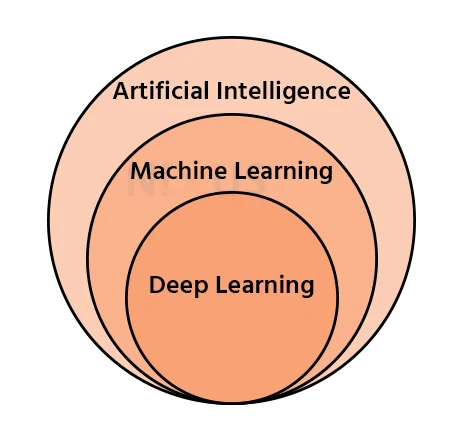
Deep learning is, in essence, a subfield of machine learning. In reality, deep learning is a type of machine learning that works in a comparable manner (hence why the terms are sometimes loosely interchanged). Its capacities, though, vary.
| Metric | Deep Learning | Machine Learning |
| Data requirement | Deep Learning algorithms rely heavily on a huge amount of data, thus we must feed a significant amount of data in order to get decent efficiency. | Machine learning requires a large quantity of data, it may also operate with lesser amounts of data. |
| Training and implementation time | Deep Learning requires a long implementation time for training the models yet a short execution chance to examine the algorithm. | Machine learning process takes shorter time for training the modeling than deep learning, but also it takes a considerable time to verify the hypothesis. |
| Feature extraction | Deep learning is an improved type of machine learning that will not require the feature extraction for each issue; rather, it attempts to learn high-level features from raw data by itself. | ML algorithms require a stage of extracting features by an expert before proceeding |
| Outcome interpretation | When working with a deep learning algorithm, we can obtain a more accurate outcome for a specific issue than when working with a machine learning model, but we are unable to determine why this specific result evolved and the logic behind it. | When working with machine learning, we can readily comprehend the results, which means we can understand why this outcome occurred and what the approach was. |
| Applications | Deep learning methods are ideal for tackling difficult challenges.
Eg: self-driving cars |
Machine learning algorithms can be used to solve simple to somewhat complicated issues.
Eg: Sentiment analysis |
| Type of data | Because they depend on the levels of the Artificial neural network, Deep Learning models can operate both with structured and non – structured data. | The majority of machine learning techniques require structured data |
| Strategy | A deep learning algorithm differs from a standard machine learning algorithm in that it accepts data for a particular issue and produces the final result. As a result, it takes an end-to-end strategy. | The standard ML paradigm divides an issue into sub-parts and solves each portion separately before producing the final solution |
| Hardware requirements | To perform successfully, the deep learning model requires a large quantity of data, which necessitates the use of GPUs and thus the high-end system. | Machine learning algorithms can run on low-end devices because they do not require a huge volume of input. |
| Human intervention | Deep learning is more difficult to establish initially, but it takes less interaction after that. | To produce outcomes, machine learning needs greater continuing human involvement. |
Future of ML and DL:
Both ML and DL will have a long-term impact on people’s lifestyles, and their capacities will alter practically all industries. Hazardous vocations, such as space flight or employment in hostile settings, could be completely replaced by automation.
Careers in ML and DL:
To take ML and DL to reach their highest performance, it will involve the continued human efforts. While each industry will have its own unique requirements in this area, there are a few important career pathways that are now in demand.
1. Data Scientist:
Data Scientists create the techniques and processes required to achieve their industry’s objectives. They also supervise the collection and analysis of computer-generated data. This fast-growing vocation requires programming knowledge (Python, Java, etc.) as well as a thorough grasp of an industry’s or sector’s operational and organizational goals.
Glassdoor’s average annual income is $113,000.
ZipRecruiter’s average annual income is $120,000.
2. Machine Learning Engineers
They put data scientists’ algorithms into practise and incorporate them into the company’s complicated data and technology environments. They’re also in charge of implementing/programming robotic systems or bots that act in relation to data.
Glassdoor’s average annual income is $114,000.
ZipRecruiter’s average annual income is $131,000.
3. Computer Vision Specialist
These professionals assist machines in deciphering 2D or 3D pictures and are essential in deep learning, such as AR and VR. This is only one instance of a particular job inside the machine learning environment; each sector will have its own experts to assist align AI’s capabilities with industry objectives and technology.
Glassdoor’s average annual income is $114,000.
ZipRecruiter’s average annual income is $96,000.
Conclusion
To summarize, deep learning is machine learning with greater capabilities and a distinct working methodology. And choosing one of them just to tackle a certain problem is measured by the quantity of data and the intricacy of the topic.
Deep learning takes far more data to work successfully than a standard machine learning method. Deep learning frequently works with millions of data points, whereas machine learning works with thousands. A deep learning system requires a huge dataset to minimize irregularities and produce high-quality predictions due to its complicated multi-layer design.